
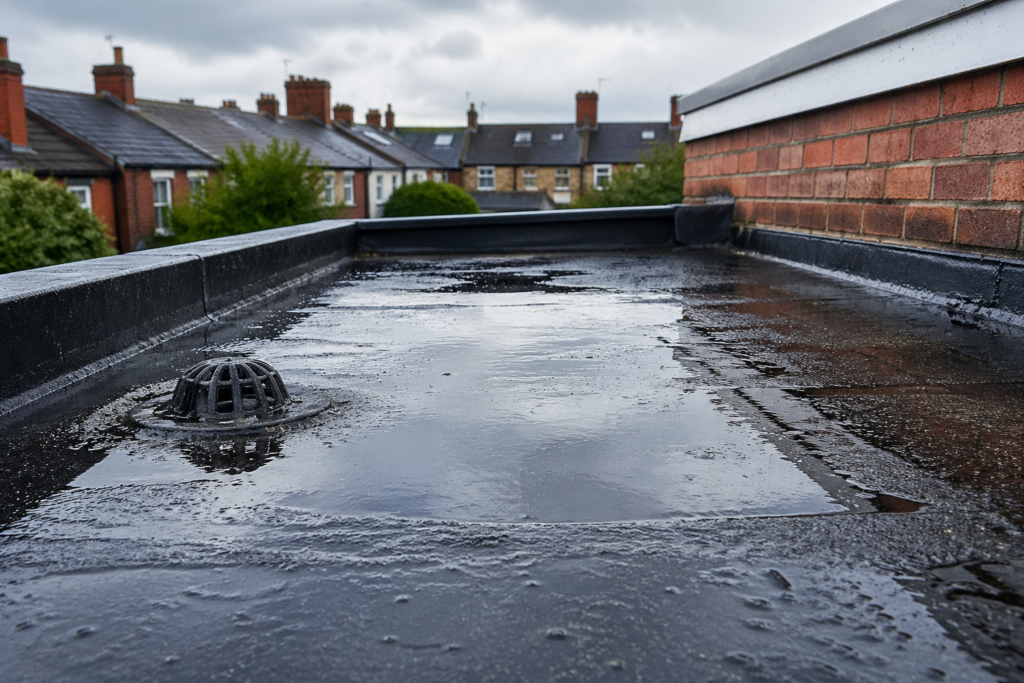
A flat roof that holds water is not simply a nuisance. It is a warning sign. When rain falls and the puddles stay, something in the drainage or structure is not working as it should. Left unaddressed, that standing water quietly weakens the waterproofing layer, adds unnecessary load to the roof deck, and eventually finds its way inside.
This guide explains why ponding water happens, what the real risks are, and which repair options genuinely work. Whether you have a garage roof, a rear extension, or a commercial property, the same principles apply.
What Ponding Water Actually Means
The term “ponding water” refers to rainwater that remains on a flat roof surface for more than 48 hours after rainfall has stopped. It is not the same as surface water that drains away within a few hours.
Despite what many homeowners assume, flat roofs are not truly flat. They are built with a slight pitch, typically between 1:40 and 1:80, that directs water towards outlets, gutters, or internal drainage channels. When that gradient is lost, blocked, or was never adequate to begin with, water has nowhere to go.
In practice, ponding water is one of the most common issues encountered during flat roof repair work. The combination of persistently wet weather, older housing stock, and frequent rear extensions makes it a recurring problem for many homeowners. Recognising it early makes an enormous difference to both the cost and complexity of the solution.
The Most Common Causes of Flat Roof Drainage Problems
Pooling water rarely has a single cause. In most cases, it results from one or more of the following:
Inadequate or Poorly Positioned Outlets
If drainage points were installed without accounting for the roof’s natural low spots, water will bypass them entirely. This is especially common on older extensions and garages where drainage was added as an afterthought rather than designed into the build.
Blocked Gutters and Drains
Leaves, moss, debris, and even bird nesting material accumulate in gutters and outlets over time. Once a blockage forms, water backs up and sits. This is among the most straightforward causes to address, yet it is often the most overlooked.
Roof Sagging and Deck Movement
As roofing materials age, or where the underlying joists have been affected by moisture over the years, the roof deck can begin to dip. These subtle depressions, invisible from ground level, become collection points every time it rains. Older period properties are particularly susceptible to this.
Damaged or Degraded Waterproofing Membranes
Cracks, blisters, or delamination in the waterproofing surface can alter how water moves across the roof. Rather than flowing towards an outlet, water pools in the damaged area and slowly works its way through.
Structural Alterations
Loft conversions, extensions, and insulation upgrades are all common in older properties. If these works change the load or profile of the roof without adjusting the drainage layout, water flow can be disrupted entirely.
Why You Should Not Ignore Flat Roof Leaks
Homeowners sometimes assume that standing water is cosmetically unpleasant but structurally harmless. This is a costly misconception.
Water weighs roughly one kilogram per litre. A modest pool across a garage roof can add several hundred kilograms of additional load. On roofs with ageing joists or softwood decking, this is significant.
Beyond the structural concern, persistent moisture is the primary driver of flat roof deterioration:
Waterproofing failure occurs as membranes are subjected to continuous hydrostatic pressure. Seams and joints, areas that are already vulnerable, are the first to give way.
Damp ingress spreads inward through the ceiling structure. By the time damp patches appear inside the property, water has often been penetrating for some time.
Mould growth follows. This affects air quality and, in poorly ventilated spaces, can become a serious health concern.
Material degradation accelerates. Felt roofing is particularly vulnerable to prolonged water contact. Blistering and cracking develop faster than they would on a well-drained roof.
Acting promptly at the first sign of ponding is nearly always less expensive than waiting.
How Roofers Diagnose the Problem
Before any repair work begins, a thorough inspection is essential. A qualified roofer will assess:
- Where water is collecting and whether it correlates with a low point or blocked outlet
- The condition of the existing membrane, including any cracking, blistering, or lifting edges
- Whether the roof deck has any movement or soft spots that indicate underlying damage
- The state of the gutters, outlets, and flashings
- The overall fall of the roof and whether it meets current guidance
Thermal imaging is sometimes used on larger or more complex roofs to identify moisture that has penetrated beneath the surface layer without being visible from above. This takes some of the guesswork out of the diagnosis and allows repairs to be targeted rather than speculative.
Repair Options for Ponding Water on Flat Roofs
The right solution depends entirely on what is causing the problem. There is no universal fix for flat roof drainage issues, and anyone who suggests otherwise without carrying out an inspection first should be treated with caution.
Clearing and Upgrading Drainage Points
Where the cause is a blocked or undersized outlet, the repair is often relatively simple. Clearing the blockage, enlarging the outlet, or repositioning it to align with the natural low point of the roof can resolve ponding with minimal disruption.
Tapered Insulation Systems
One of the most effective long-term solutions for flat roofs with insufficient fall is the installation of tapered insulation. Rather than replacing the entire roof structure, tapered boards are fitted above the existing deck to create a gentle slope towards the drainage point. A new waterproofing membrane is then applied over the top.
This approach addresses the root cause of the problem, rather than simply patching the symptom. It also improves the roof’s thermal performance as a side benefit.
Firring Pieces
On older garages and timber-framed extensions where the structure has settled or where the original gradient was insufficient, firring pieces offer a more traditional solution. These are tapered timber strips fixed to the roof joists to introduce a controlled slope. Once in place, the deck is reboarded and a new waterproofing layer is applied.
This method is particularly suited to roofs where the existing structure is otherwise sound and does not need full replacement.
Membrane Repair and Overlay
Where ponding has caused localised damage to the waterproofing layer, targeted repairs may be sufficient. Cracks and delaminated sections are addressed, and a new layer of felt, EPDM rubber, GRP fibreglass, or a liquid-applied system is installed over the affected area.
For more extensive deterioration, a full overlay or strip-and-replace approach may be recommended.
Installing Additional Outlets
On larger roofs or those with a complex layout, a single drainage point is sometimes simply inadequate for the volume of water that accumulates during heavy rainfall. Adding outlets at strategic low points improves the speed at which water clears and reduces the risk of ponding after sustained rain.
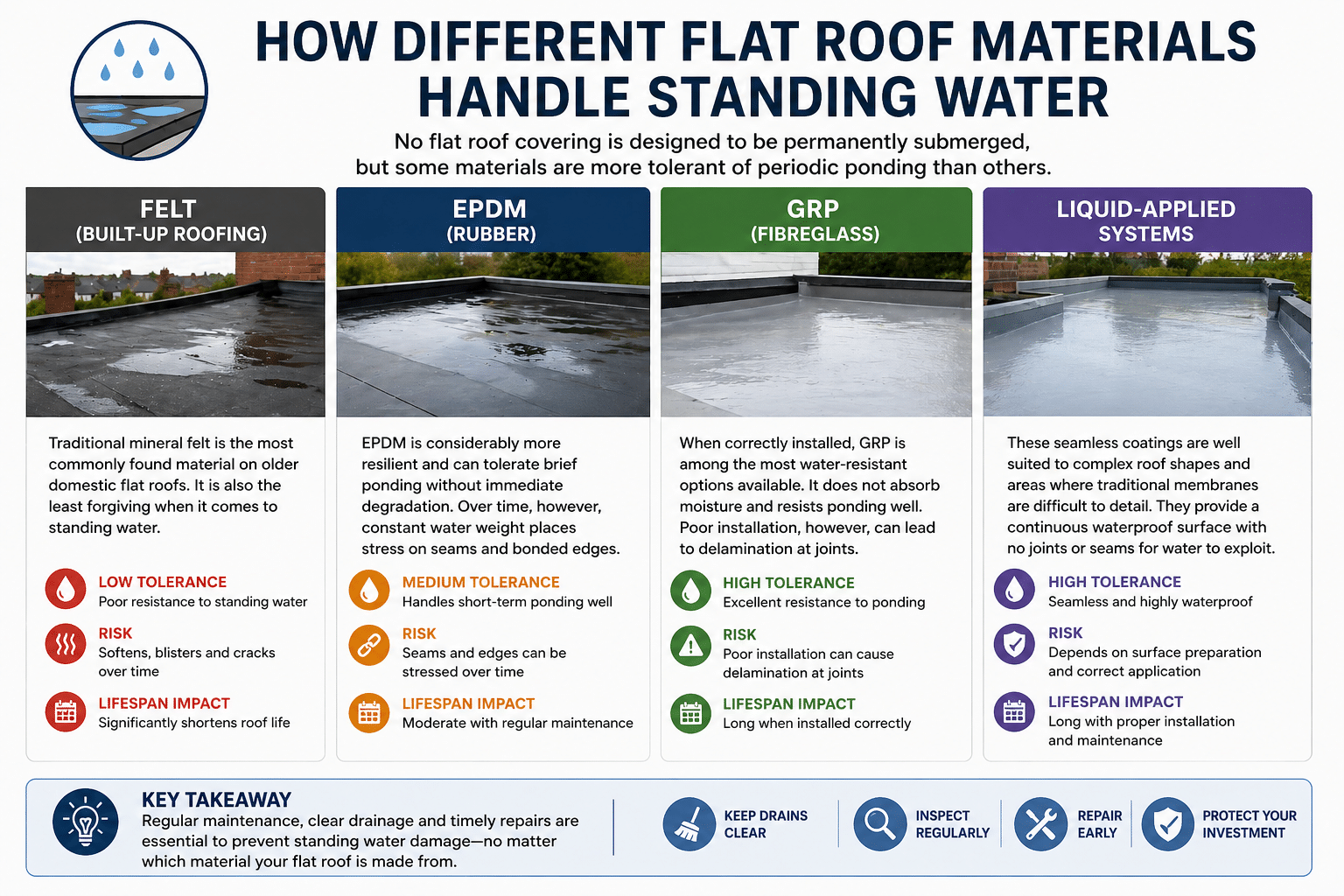
How Different Flat Roof Materials Handle Standing Water
No flat roof covering is designed to be permanently submerged, but some materials are more tolerant of periodic ponding than others.
Felt (Built-Up Roofing)
Traditional mineral felt is the most commonly found material on older domestic flat roofs. It is also the least forgiving when it comes to standing water. Prolonged contact causes the surface to soften and blister, accelerating the ageing process significantly.
EPDM Rubber
EPDM is considerably more resilient and can tolerate brief ponding without immediate degradation. Over time, however, constant water weight places stress on seams and bonded edges.
GRP Fibreglass
When correctly installed, GRP is among the most water-resistant options available. It does not absorb moisture and resists ponding well. Poor installation, however, can lead to delamination at joints.
Liquid-Applied Systems
These seamless coatings are well suited to complex roof shapes and areas where traditional membranes are difficult to detail. They provide a continuous waterproof surface with no joints or seams for water to exploit.
Seasonal Maintenance to Prevent Flat Roof Leaks
Routine maintenance is the single most effective way to prevent ponding water from becoming a recurring problem. A basic programme across the year should include:
Spring: Inspect the roof surface for winter damage. Look for cracked or lifted membrane sections, check that flashings are firmly bedded, and clear any debris that has accumulated over the colder months.
Summer: Heat causes felt and some membranes to expand and contract. Check for new blistering or cracking, particularly in areas that catch the afternoon sun.
Autumn: Clear leaves and debris from gutters and outlets regularly. This is the season when blockages form fastest, and a blocked outlet in October can mean standing water throughout the wettest months of the year.
Winter: After any significant storm, carry out a visual inspection from ground level or a first-floor window. Overflow marks on external walls, damp patches on internal ceilings, and water staining around the fascia are all indicators that drainage is being compromised.
Frequently Asked Questions
How long can water sit on a flat roof before it causes damage?
The general rule is 48 hours. Beyond this point, the risk of membrane deterioration and ingress increases considerably. If water consistently remains for longer than this after normal rainfall, it is worth having the roof assessed.
Is ponding water covered by home insurance?
This varies between policies and insurers. Most standard home insurance policies treat ponding as a maintenance issue rather than sudden or accidental damage, which typically means it falls outside cover. Emergency repairs following storm damage may be treated differently. Always check your policy wording and speak to your insurer before assuming a claim will be accepted.
Can I repair a flat roof myself?
Minor maintenance tasks, such as clearing gutters and removing debris, can be carried out safely by a competent homeowner. Any work involving the waterproofing layer, drainage points, or structural elements should always be left to a qualified roofer. Flat roofs can be deceptively fragile underfoot, and incorrect repairs often introduce new problems while masking the original one.
How much does flat roof drainage repair cost?
Costs vary significantly depending on the size of the roof, the underlying cause, and the repair method required. Clearing a blocked outlet is a fraction of the cost of installing a tapered insulation system. A proper inspection is the only reliable way to obtain an accurate cost estimate.
When to Call a Professional
Contact a qualified roofer if you notice any of the following:
- Water remaining on the roof surface more than 48 hours after rainfall
- Damp patches, staining, or mould appearing on internal ceilings or walls
- Visible cracks, blistering, or lifting edges on the roof surface
- Gutters overflowing consistently during moderate rainfall
- Soft or spongy areas underfoot if you do access the roof
- A noticeable dip or depression forming anywhere on the roof
Flat roof repair carried out early nearly always costs less than the same work left until the damage is more extensive. A qualified roofer will assess the specific drainage situation on your property and recommend the most targeted, cost-effective solution.
Get Your Flat Roof Assessed by a Local Expert
Ponding water is rarely a problem that resolves itself. The drainage issue, the structural settlement, or the failing membrane that caused it will not improve without intervention. What tends to improve is a homeowner’s familiarity with the damp patch on the ceiling, until the day it becomes impossible to ignore.
If your flat roof is collecting water, or if you have spotted the early signs of a leak or drainage problem, getting a professional assessment is the sensible first step. A brief description of what you have noticed, along with a rough idea of the roof type and age, is usually enough to give an experienced roofer a strong initial picture.
Do not wait until the problem worsens. Flat roof drainage issues are almost always more straightforward to resolve when they are caught early.
